News
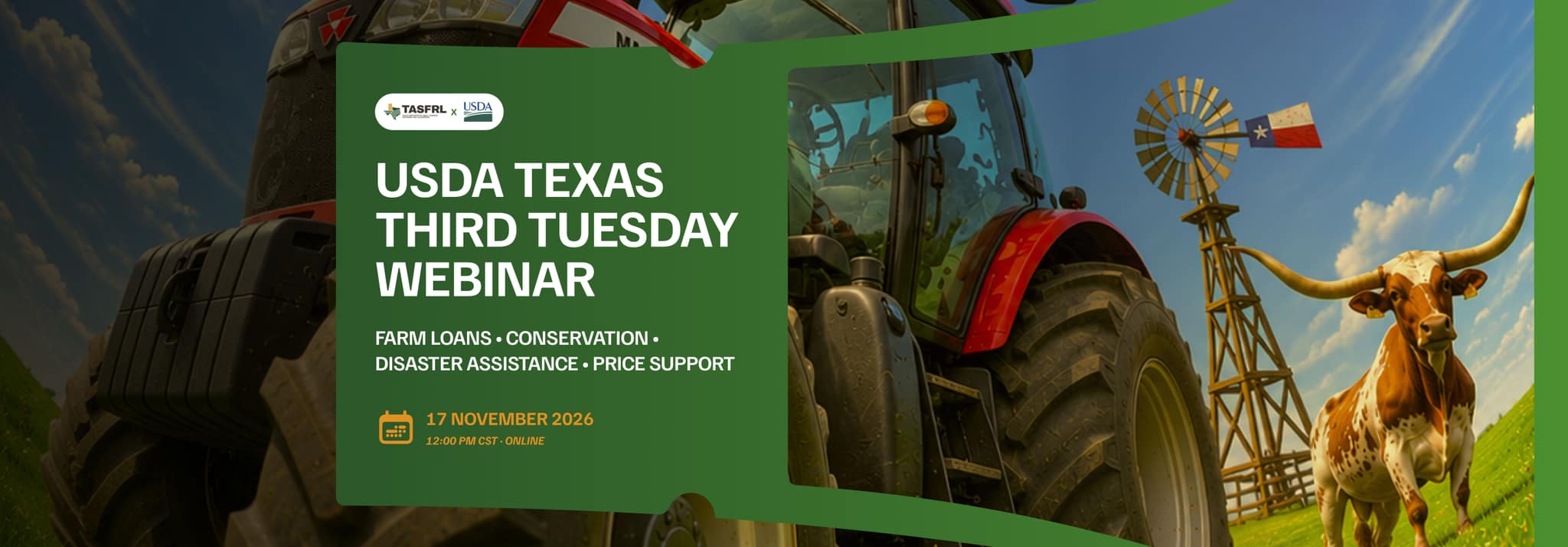
USDA to Host Free Texas Third Tuesday Webinar on November 17
November 15, 2026
Author: TASFRL Team
Farmers, ranchers, landowners, and others interested in USDA programs are invited to attend Texas Third Tuesday on Tuesday, November 17, 2026, at 12:00 p.m. Central Standard Time.
Hosted by USDA’s Farm Service Agency (FSA) in Texas, this quarterly webinar series shares updates on FSA and Natural Resources Conservation Service (NRCS) programs. The November session will cover farm loans, conservation, disaster assistance, and commodity price support programs.
The webinar is free, and registration is required.
Register for the Webinar
TASFRL is sharing this USDA-hosted opportunity with our agricultural community.
For more information, contact Joshua Coleman, State Outreach Coordinator with the USDA Farm Service Agency in Texas, at joshua.coleman@usda.gov or 979-680-5252.
Persons with disabilities who require accommodations should contact Joshua Coleman at the email address or phone number above by Tuesday, November 10, 2026. Dial 7-1-1 to access telecommunication relay services.
Source: USDA Farm Service Agency, Texas State Office.
Other News
Beyond the Evidence: The Agricultural Forensics and Innovation Summit
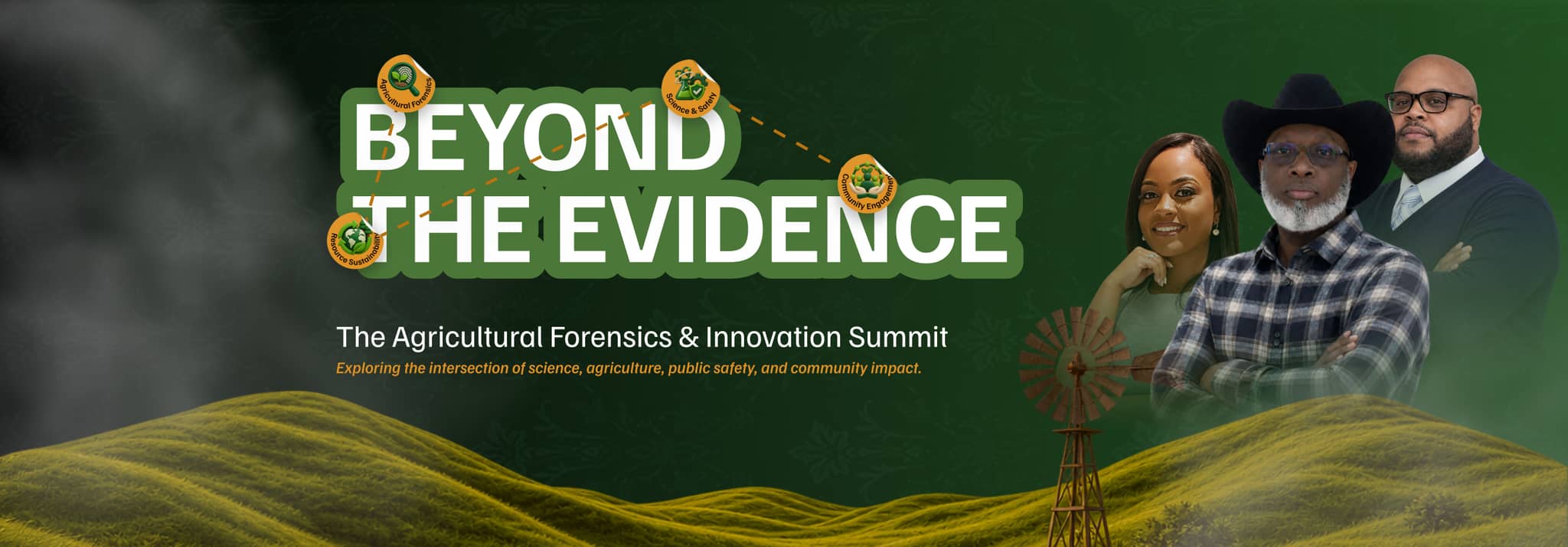
Prairie View A&M University's College of Agriculture, Food, and Natural Resources invites you to Beyond the Evidence: The Agricultural Forensics and Innovation Summit on Wednesday, November 18, 2026, in Prairie View, Texas. The summit explores the intersection of science, agriculture, public safety, and community impact, including agricultural forensics, natural resources and sustainability, scientific innovation, and community engagement. Event details Date: Wednesday, November 18, 2026 Time: 10:00 a.m.–12:00 p.m. Central Standard Time (CST) Venue: Don K. Clark Auditorium, CoPASI (formerly Juvenile Justice), Room 155 Address: 575 Anne Preston Street, Prairie View, Texas 77446 Featured speakers Keynote — Dr. Paris Favorite: Agricultural Forensics Expert, Research Assistant Professor and Extension Specialist, CAFNR Research Featured speaker — Mr. Joseph K. Johnson: TASFRL Director Featured panelist — Dr. Elliott Washington: Assistant Program Leader, Agriculture and Natural Resources, PVAMU Extension Refreshments will follow the event. Please register if you plan to stay for lunch. Register for the summit Register through the official PVAMU form The TASFRL link opens the organizer's Microsoft Forms RSVP. Registration is handled by Prairie View A&M University. View or download the organizer's original full-resolution flyer Questions? Contact Robert Lewis at rlewis@pvamu.edu or Dr. Paris Favorite at pffavorite@pvamu.edu. Organized by Prairie View A&M University's College of Agriculture, Food, and Natural Resources. Shared by TASFRL.

TASFRL Team
Nov 11, 2026
Texas Landowners Are Carrying More Than One Question
When One Question Becomes a Family Question Family land can connect several generations, but that connection can also bring complicated decisions. Questions can involve: Heirs' property Identifying heirs Co-ownership Succession Property access Taxes Mineral rights Agricultural use Behind each question can be a different family experience, responsibility, or concern about what happens to the property next. A question about ownership can become a question about who has a role in the decision. A question about succession can become a question about what the next generation will inherit. And a question about the property today can become a question about its future. One question does not always stand alone. When the Next Question Is Where to Find Help Knowing what is happening on the property is one thing. Knowing where to take that question is another. There may be programs, organizations, professionals, and other sources of support available. But finding a resource does not always mean knowing whether it fits the situation. A landowner may still be asking: Does this apply to my circumstances? Who can help me understand it? What should I do next? The question can move from “What is the problem?” to “Who can help me work through it?” Finding the right connection can become part of the question itself. When the Question Is Not Whether Water Exists Water provides another example of how one question can lead to another. A property may already have a pond or well. But what happens when the water is not where it is needed? The question changes from: “Is there water?” to: “How can the water get where it is needed?” That can bring other considerations into the conversation: Water infrastructure Conservation practices Technical resources Available programs Aquifers Water distribution Infrastructure investment The resource may already exist. The question becomes how to access and use it in a way that fits the property. When Timber Harvesting Creates the Next Question The same pattern can appear after timber harvesting. Once the trees are removed, what happens next? Landowners may still be dealing with: Logging slash Limbs Brush Logs Pine needles Other vegetation That can lead to another question: What approach makes sense for this property? Prescribed fire may be considered in situations where suitable fuel remains. Mechanical treatment or herbicide may also be considered in some circumstances. The appropriate approach can depend on the condition of the property, the remaining fuel, available resources, and the landowner's goals. The answer to one land management question can create the next decision. What Connects All These Questions? The experiences shared included questions about: Ownership Succession Taxes Water Forestry Agriculture Income Land management At first, they may seem like separate subjects. But the experiences shared by landowners showed how closely they can connect. An ownership question can become a succession question. A water concern can become an infrastructure question. A forestry decision can lead to another land management decision. And a search for a resource can lead to a question about who to contact next. That is why the question is not always simply: “What is the answer?” Sometimes it is: “What is the next question I need to answer?” Where Can the Next Question Lead? There is no single path that fits every property or every family. But a complicated question can become easier to navigate when the next step is clear. 1. Understand the Situation Start with the specific issue. Look at the ownership situation, property conditions, costs, responsibilities, or management goals that shape the question. The clearer the situation, the easier it can be to identify what information may be relevant. 2. Understand the Options Once the situation is clearer, consider the options that may fit. That could involve a program, management practice, technical assistance, professional guidance, or additional information. Understanding the options can make the next decision clearer. 3. Find the Right Connection Then comes another question: Who can help? The right connection could be a program, organization, professional, technical resource, or another reliable source of information. The goal is not simply to find a resource. It is to find one that fits the question being asked. 4. Take the Next Practical Step Not every question needs to be answered all at once. The next step may be: Gathering documents Asking a more specific question Contacting a resource Assessing the property Learning more before making a decision One clear next step can make a complicated question easier to navigate. The Answer Begins With Listening There is no single answer for every property or every family. What became clear through these conversations is that understanding the situation comes first. Landowners already know their land through years of experience. They know what has changed, what needs attention, and what decisions their families have already faced. The goal was not to tell them what they should know. It was to listen to what they already knew. And that is where the next step can begin. From Where Did These Conversations Come? What you have just read is not simply a description of challenges landowners might face. It comes from experiences shared directly by Texas landowners and families. During three Community Listening Sessions, they talked about what they were experiencing, the decisions they were facing, and the things they were still trying to understand. Two conversations took place virtually, followed by one in-person conversation. These three conversations took place through a collaboration with the Houston Advanced Research Center (HARC), with the experiences and perspectives of landowners forming a central part of the conversation. So, what you have read here is not simply an article about landowners. It is a picture built from what they themselves shared. What Comes Next? The three Listening Sessions may have ended, but the conversation does not have to stop there. Future community conversations or Listening Sessions may create more opportunities for landowners to share what they are experiencing and what they need next. Because a more useful answer often begins with listening first. Your Land. Your Experience. Your Voice Matters. No two stories are exactly the same. Some stories carry years of experience. Some carry family history. Some are still being written. Every story deserves a place in the conversation.
TASFRL Team
Nov 3, 2026
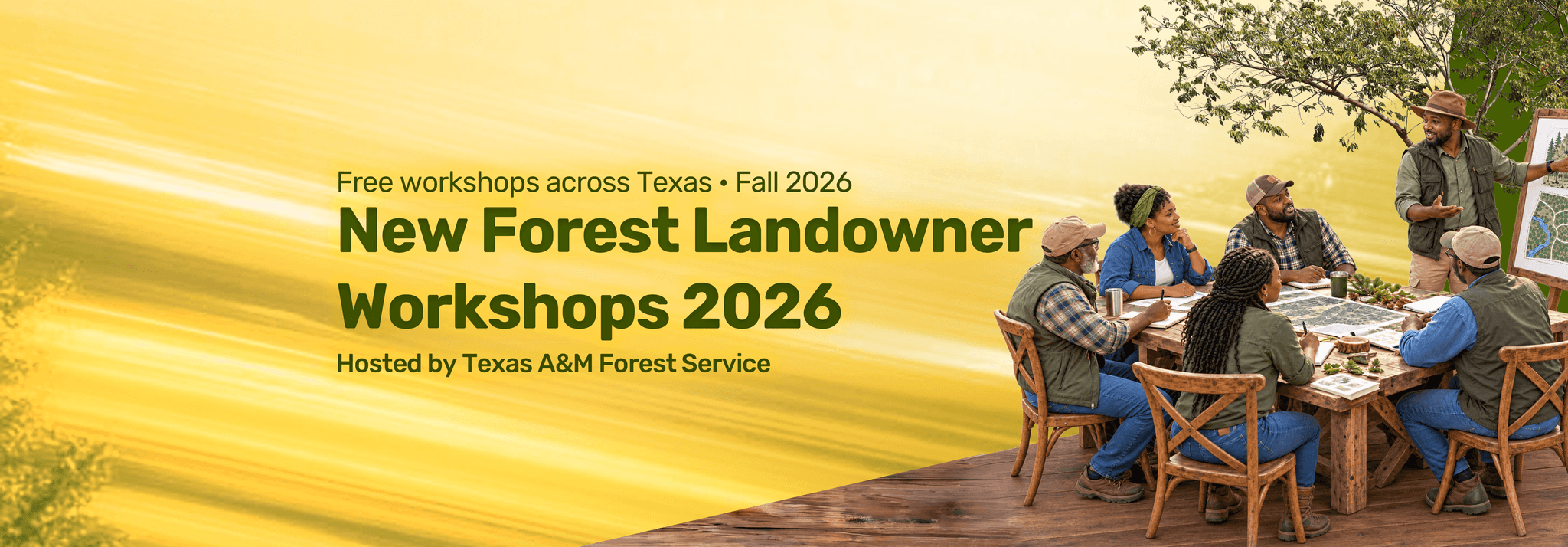
Free New Forest Landowner Workshops Coming to Texas This Fall
A starting point for caring for your forest Forest ownership comes with decisions about the land you have, the goals you want to pursue, and the support you may need along the way. These workshops focus on a new forest landowner's “to-do” list, offering a practical starting point for learning about your property and planning its future. According to the workshop flyer, participants will explore: Learning about their forest. Defining their ownership goals. Evaluating forest health. Understanding financial considerations. Beginning the process of developing a management plan. The workshops will also help participants locate natural resource professionals who can support informed management decisions. Building that support network can help landowners identify whom to contact as they begin working through questions about their forest. If you are still considering forest ownership, these topics offer an introduction to the decisions involved. If you have already acquired land, they provide a starting point for thinking about what you want to achieve and how a management plan could guide your next steps. Workshop dates and locations Choose the workshop location that works for you: Lufkin: October 20, 2026 Overton: October 23, 2026 Dallas: October 26, 2026 Houston: November 2, 2026 Conroe: November 13, 2026 The dates and city names above follow the organizer's flyer. Check the official registration page for current venue details and registration information before making travel plans. Register with the organizer Visit the official registration page to find a workshop near you and sign up directly with the organizer. Register with Texas A&M Forest Service You can also view the original workshop flyer for an overview of the series. Know someone who has recently acquired forestland or is considering it? Share this article so they can review the workshop dates and find the organizer's registration page.
TASFRL Team
Oct 25, 2026